Client: Arcane Warrior, official distributor of an international brand of off-road expedition equipment. The company sells luggage systems, car tents, awnings, and expedition boxes. It has showrooms in Moscow and St. Petersburg. This equipment is chosen by both travel enthusiasts and those for whom a car is a working tool.
Task: the company is entering the Kazakhstan market, it already has an office in Almaty. A separate version of the website on a Kazakhstan domain was needed.
At the end of February, a developer who maintains the Arcane Warrior website wrote to us: “Interested in translation to Kazakh.” This happens often: it’s not the entrepreneur themselves who writes, but a designer or developer who has been tasked with preparing a website for another country.
There was no ready-made website for Kazakhstan. There was a Russian Tilda website, and the client understood well how the Kazakh version should differ from it. A buyer from Kazakhstan needs an address and phone number in Almaty, not in Moscow, their own promotions and buttons for the messengers used in Kazakhstan. And, of course, the ability to read the website in Kazakh.
Usually, in such cases, the website is simply cloned in Tilda, the clone is linked to a second domain, and then both copies are manually kept identical: every new product, price, and promotion has to be entered twice. Who likes such a routine? And over time, the versions start to diverge.
Answered client questions before connection
The discussion took about three weeks. The developer collected questions from himself and from the client.
Where will the pages be hosted? The website remains on Tilda, and Multify displays its versions on the client's domains. There was another option: to leave the Russian version on Tilda as is, and connect only the Kazakh version via Multify. We rejected this. For Google and Yandex to understand that websites on two domains for different regions are the same website, the versions must link to each other via special hreflang tags, and this cannot be done without connecting the Russian version to Multify.
Can I set my own currency rate? Yes, absolutely: the client chose a manually specified rate instead of an automatic one.
Can different contacts and payment options be displayed? Absolutely, this is configured separately for each website version.
What will happen to customer data? Applications go through Multify servers, but we do not save them or transfer them to anyone.
Compared translation models with native speakers
The client was concerned about the quality of the Kazakh translation. To evaluate Multify's work, he involved his employees in Kazakhstan. We launched three website variants on a test address, each with its own neural network: GPT-4.1 mini, Llama 4 Maverick, and GPT-5 mini. Employees compared the quality of translation on the same pages.
They noticed that GPT-4.1 mini sometimes translates too literally and bookishly, which is not how people speak in conversational language. They rated GPT-5 mini the highest, and that's what we launched with. We corrected individual inaccuracies with instructions for the neural network: for example, we fixed that the brand name Arcane Warrior is not translated.
| Choice | Model | Outcome |
|---|---|---|
 | GPT-4.1 mini | Too literal and bookish in places |
| Llama 4 Maverick | Poor translation quality |
 | GPT-5 mini | The best of the three models compared by native speakers, launched with it. Literal in places, slower than Gemini 3 Flash |
 | Gemini 3 Flash | Follows instructions more accurately than GPT-5 mini, translates better and faster |
Switched to Gemini 3 Flash a month later
After launch, the developer wrote that the translation still sounded too literal in places. By this time, new models had just been released, and we suggested switching to another neural network.
We don't know Kazakh ourselves, so we compared candidates using a
Divided the header, first screen, and footer for two countries
The headers, first screens, and footers in the Russian and Kazakh versions are different. In the Tilda constructor, they are located one below the other on the same page, and each block is marked with a CSS class with the country code. For example, the header for Kazakhstan has the class
uc-header-kz, and the header for Russia uc-header-rusmarterMultify reads these tags and removes unnecessary blocks from the page code before delivering it to the browser. A customer on arcanewarrior.ru will not receive the Kazakh footer even in a hidden form: it simply won't be on the page. Everything else is the same for all versions: catalog, reviews, FAQs.
Tilda website
One project, blocks marked with classes
Header RF
uc-header-ruHeader KZ
uc-header-kzneural network that understands it better than we do. The comparison showed that Gemini 3 Flash follows instructions more accurately and translates with higher quality. It also works faster. This is critical for a website: the page is translated on the first opening, and the customer should not have to wait. The model was switched after agreement with the client. One line in the settings was enough for this; the Tilda website did not need to be changed.
First screen RFFirst screen KZ
uc-only-kzCommon blocks: catalog, reviews, questions
Footer RF
uc-footer-ruFooter KZ
uc-footer-kzarcanewarrior.ru
Blocks marked -kz are cut out
Header RF
uc-header-ruHeader KZ
uc-header-kzneural network that understands it better than we do. The comparison showed that Gemini 3 Flash follows instructions more accurately and translates with higher quality. It also works faster. This is critical for a website: the page is translated on the first opening, and the customer should not have to wait. The model was switched after agreement with the client. One line in the settings was enough for this; the Tilda website did not need to be changed.
First screen RFFirst screen KZ
uc-only-kzCommon blocks: catalog, reviews, questions
Footer RF
uc-footer-ruFooter KZ
uc-footer-kzarcanewarrior.kz
Blocks marked -ru are cut out
Header RF
uc-header-ruHeader KZ
uc-header-kzneural network that understands it better than we do. The comparison showed that Gemini 3 Flash follows instructions more accurately and translates with higher quality. It also works faster. This is critical for a website: the page is translated on the first opening, and the customer should not have to wait. The model was switched after agreement with the client. One line in the settings was enough for this; the Tilda website did not need to be changed.
First screen RFFirst screen KZ
uc-only-kzCommon blocks: catalog, reviews, questions
Footer RF
uc-footer-ruFooter KZ
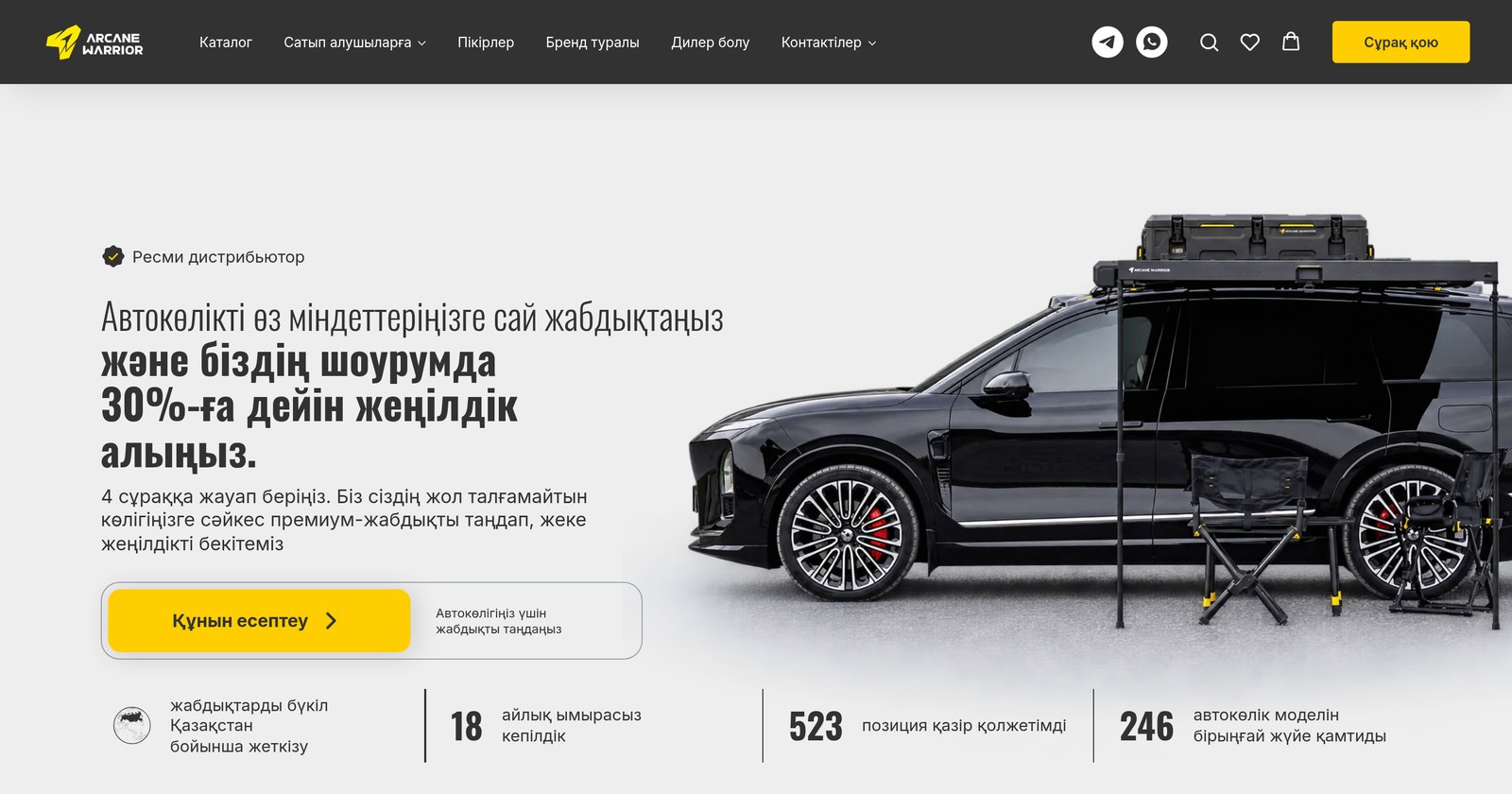
uc-footer-kzWe ended up with three versions of the website: Russian, Kazakh in Russian, and Kazakh in Kazakh. The first screen differs in promotions: for Russia, it's a gift up to $700, for Kazakhstan, a discount up to 30% in the showroom.
The delivery banner also differs: “throughout Russia” and “throughout Kazakhstan”. In the header, messenger buttons: each country shows those that are used there.
In the footer, different addresses and phone numbers: one for Moscow and St. Petersburg, another for Almaty. The same was done with maps: Yandex Maps for Russia, Google Maps for Kazakhstan.
The Kazakh version has a pixel for ad tracking, the Russian version does not.
Russia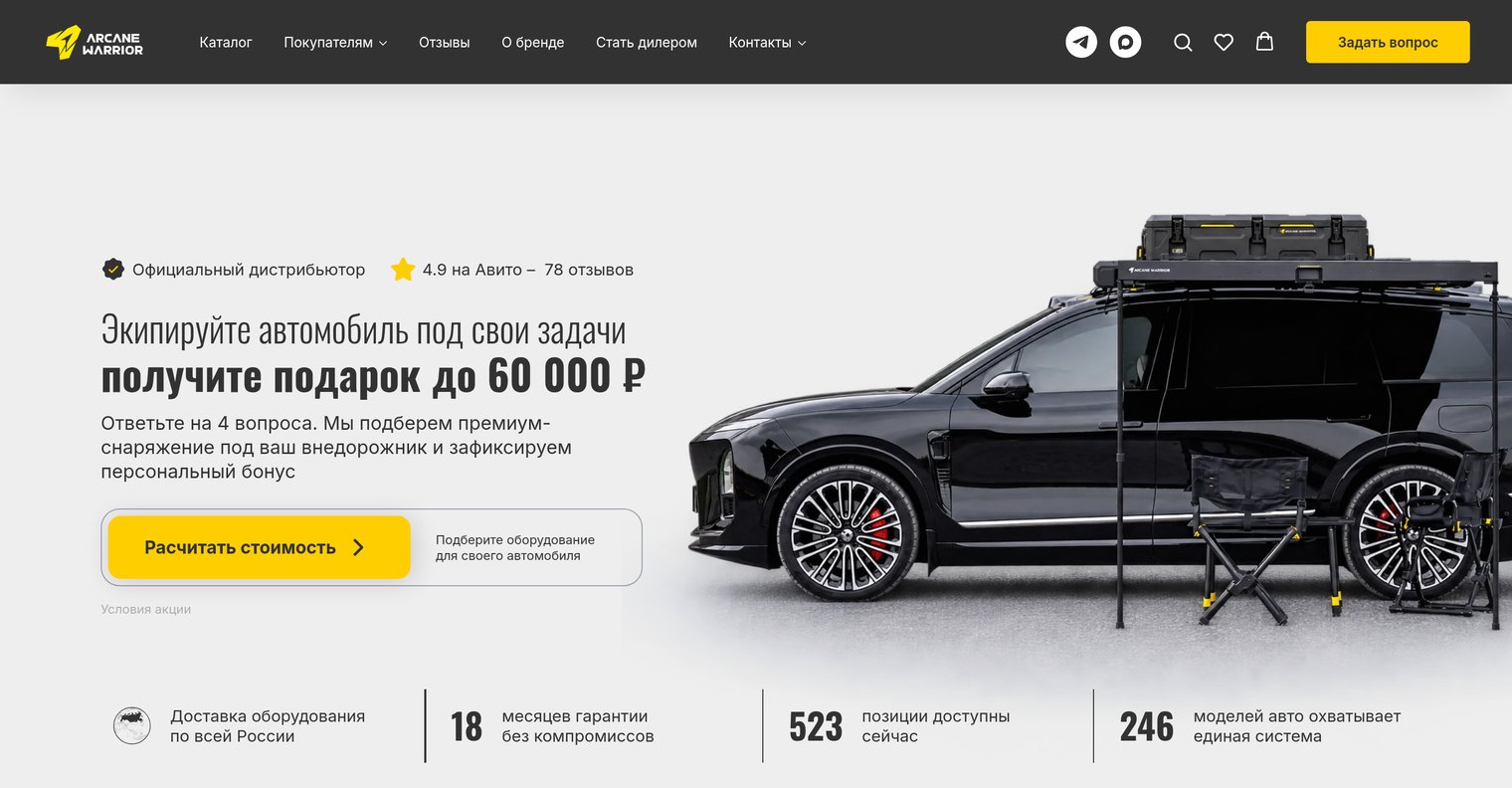
Kazakhstan, Russian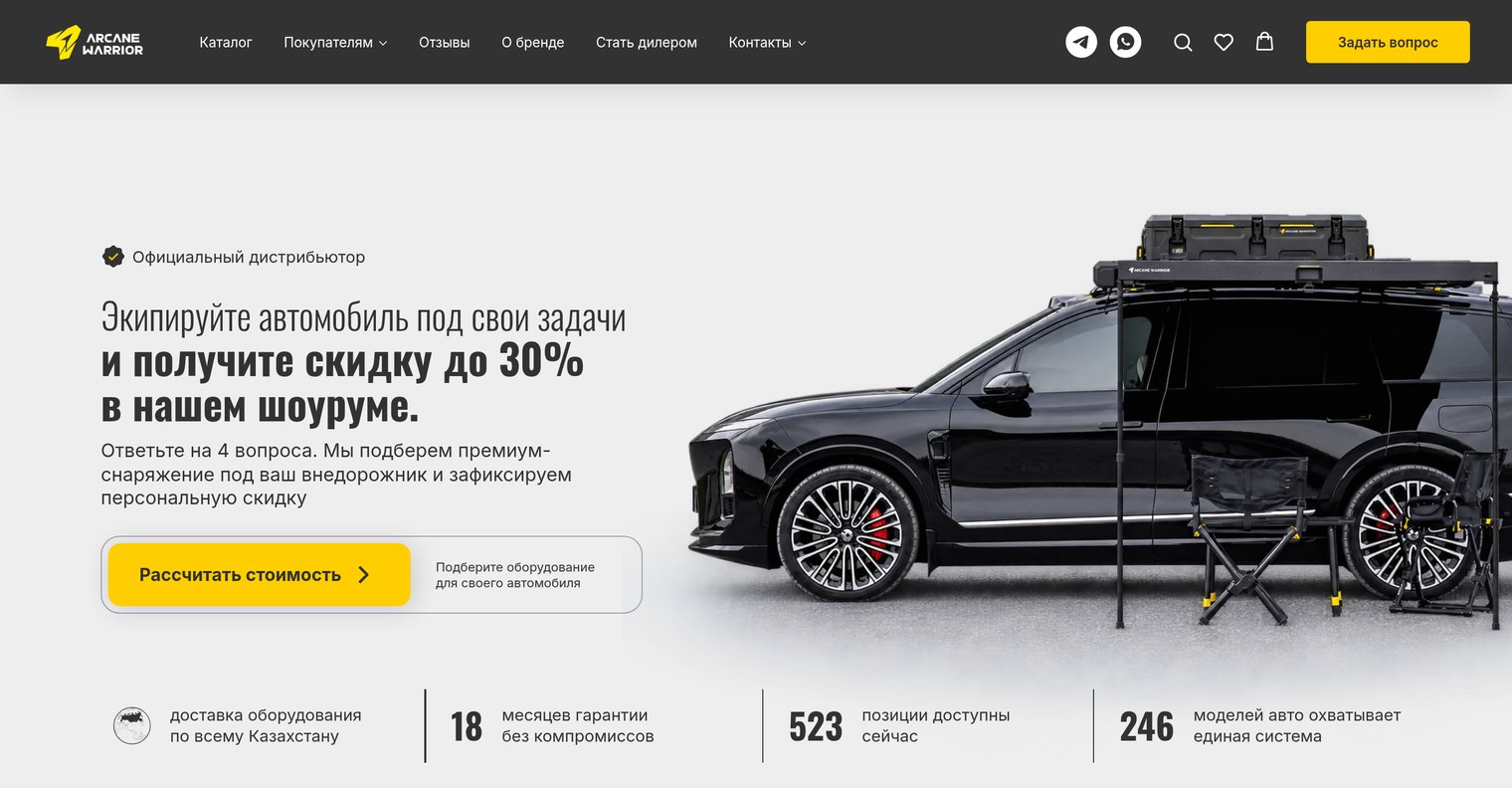
Kazakhstan, Kazakh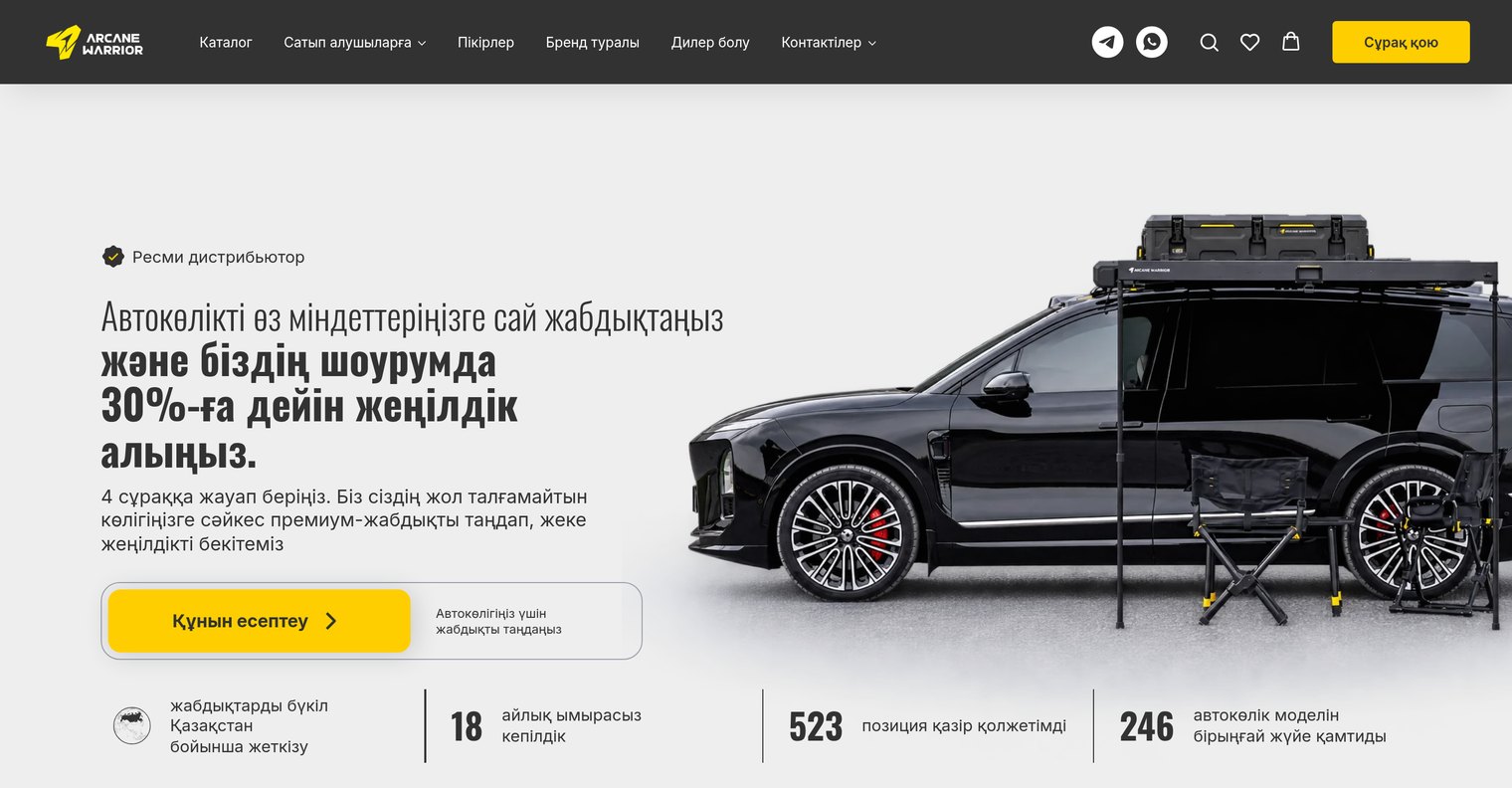
Russia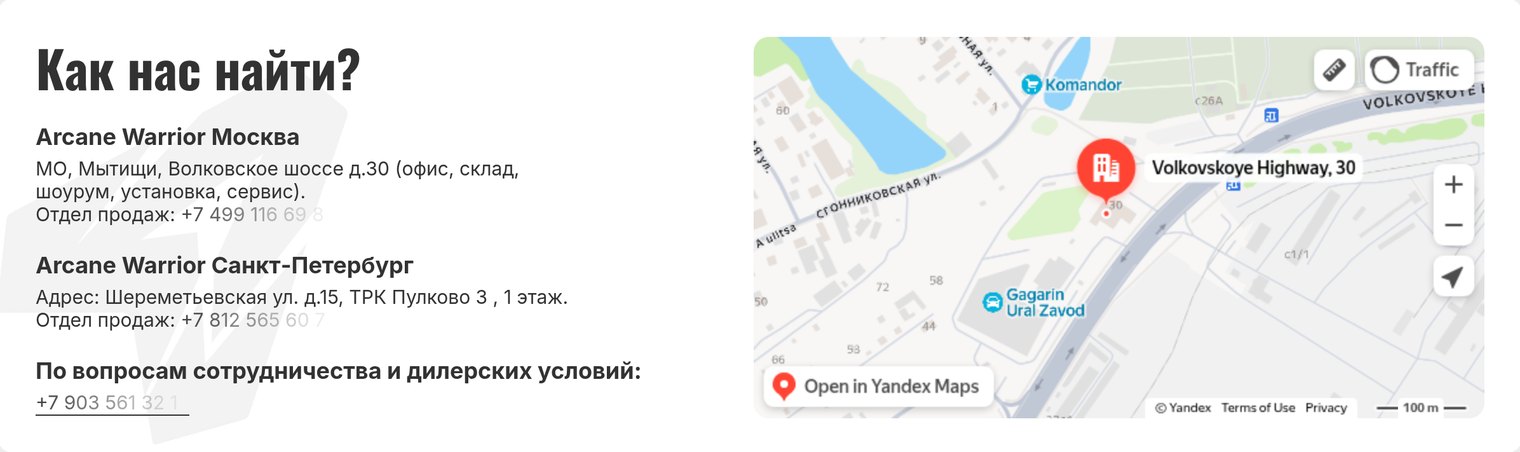
Kazakhstan, Kazakh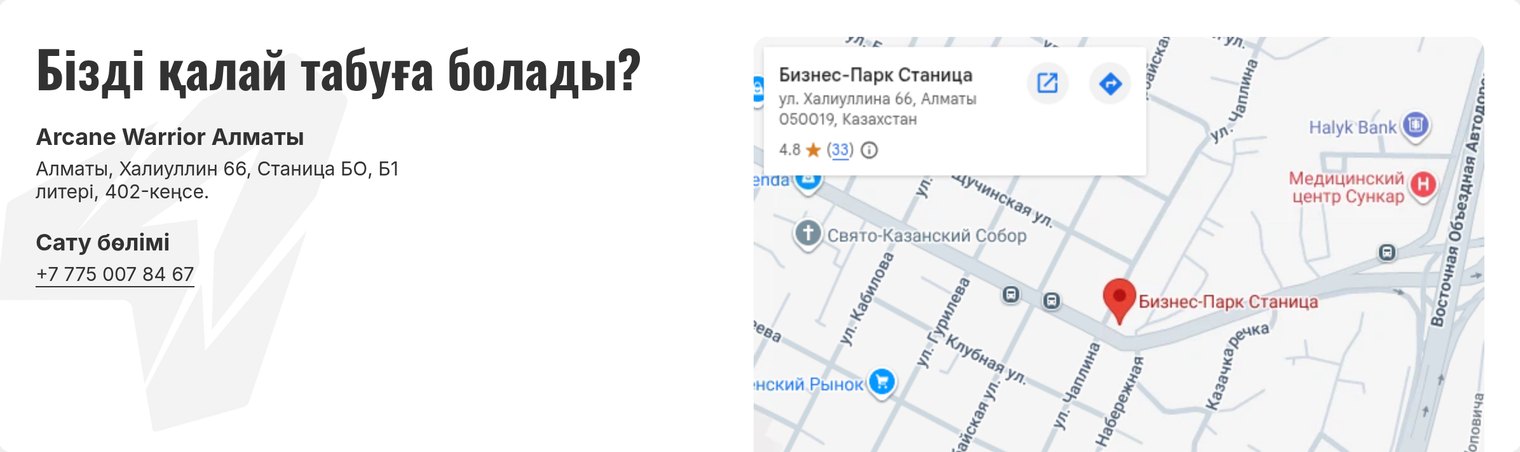
Translated Zero Block
The website is almost entirely built from Zero Block. Multify translates all text in them, even where there is its own logic and animation. After translation, animations work as before.
Translating layout is much harder than translating text, and Kazakh clearly demonstrates this: the word order in it differs from Russian. In the heading “See how to assemble a trunk in 30 minutes, by yourself”, the end of the phrase is highlighted in yellow, but in the Kazakh translation, the same words in meaning appear in the middle of the sentence, and the highlight shifts with them.
Russia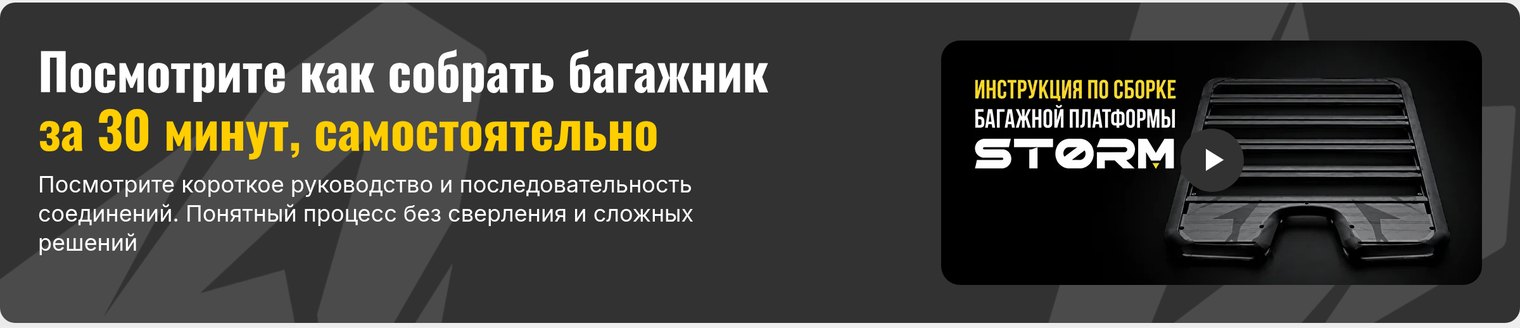
Kazakhstan, Kazakh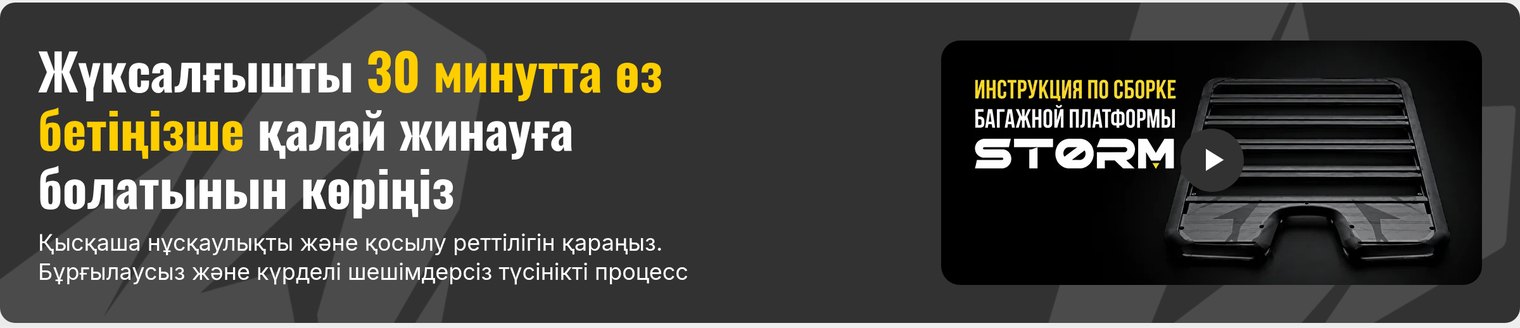
The same applies to forms. The Russian text for consent to personal data processing, like any legal text, is long and complex: “I confirm acquaintance and give Consent… in the manner and on the terms specified in the Policy…”. In the Kazakh version, the phrase is restructured according to the rules of the language, and links to documents are placed where they belong in the Kazakh sentence. Fields, hints, and buttons are also translated.
Russia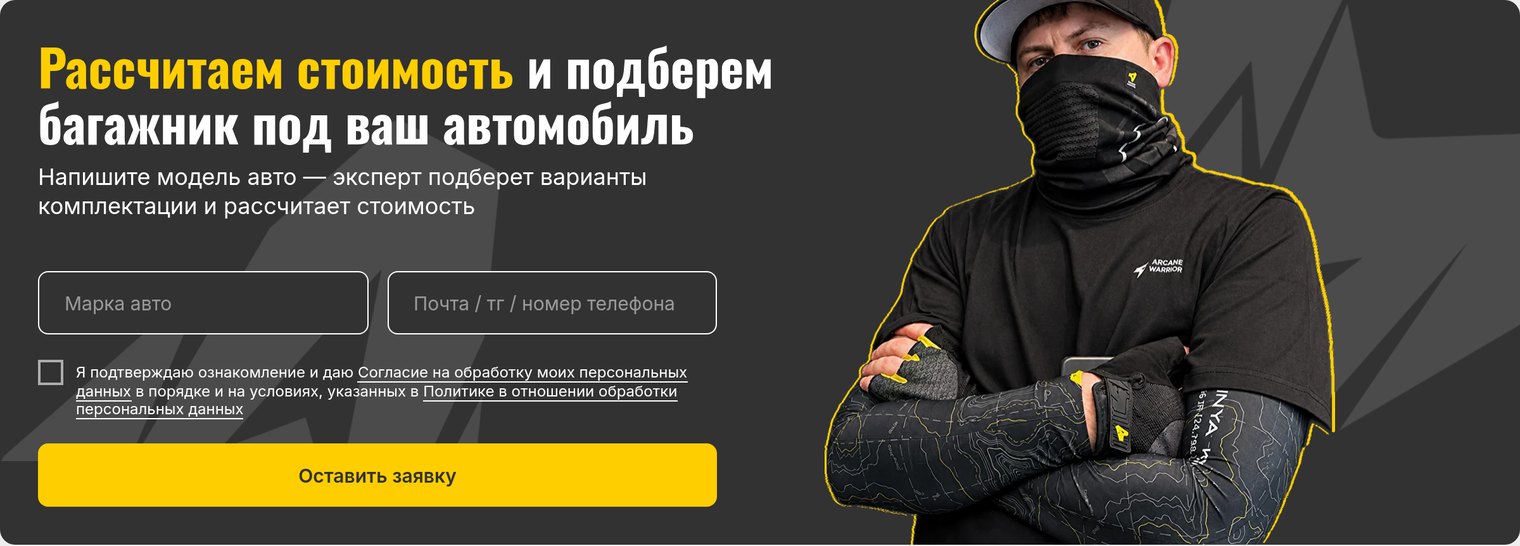
Kazakhstan, Kazakh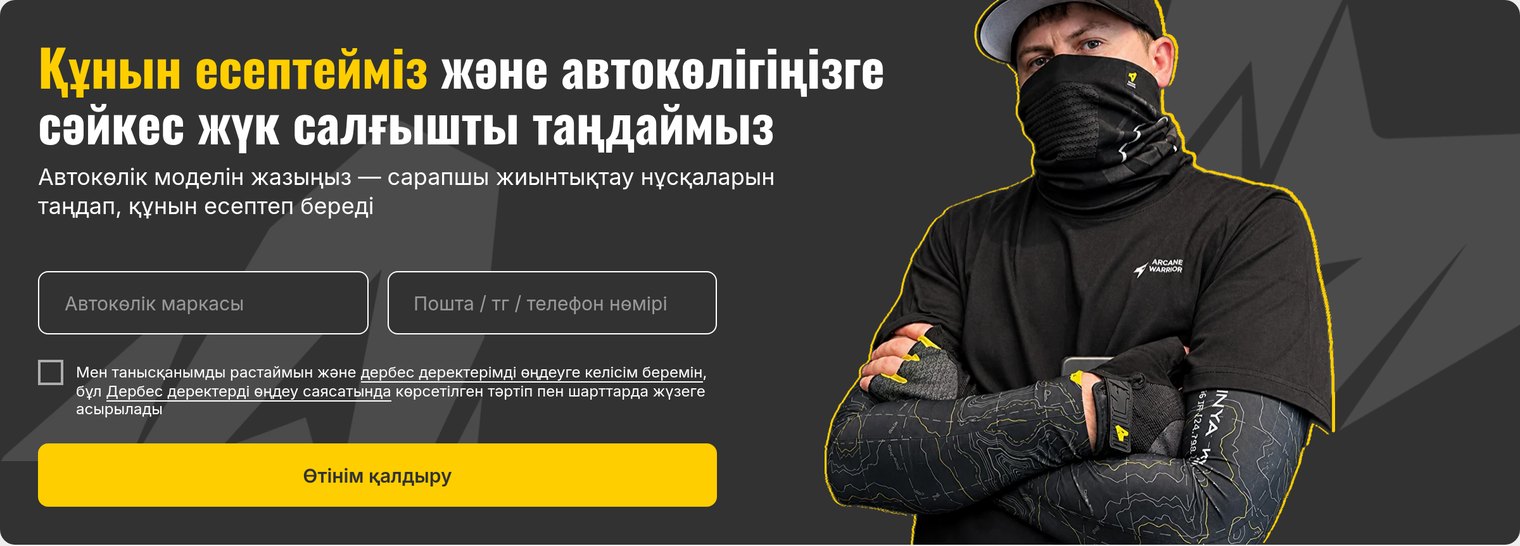
Translated the catalog and showed prices in tenge
The store relies on the standard Tilda catalog: products, sections, discounts, sorting, search. In the Kazakh version, product names, discount badges, configuration options, pop-up windows, and product card tabs are translated: description, characteristics, instructions. The "Customers also buy" block is dynamically loaded and also translated.
In the Kazakhstan version, prices are shown in tenge at the rate chosen by the client, but the catalog itself is filled out once and only in rubles.
Russia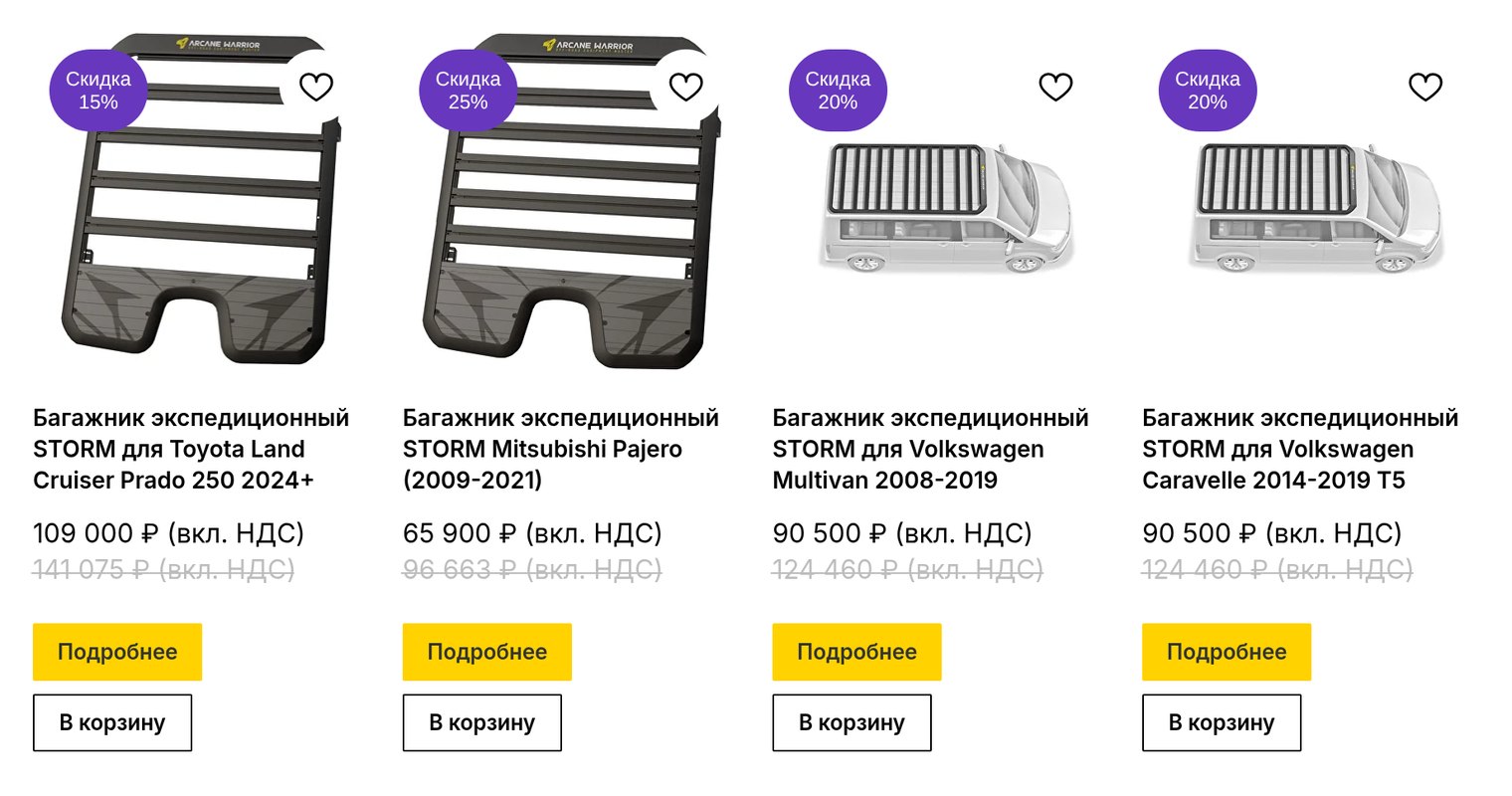
Kazakhstan, Kazakh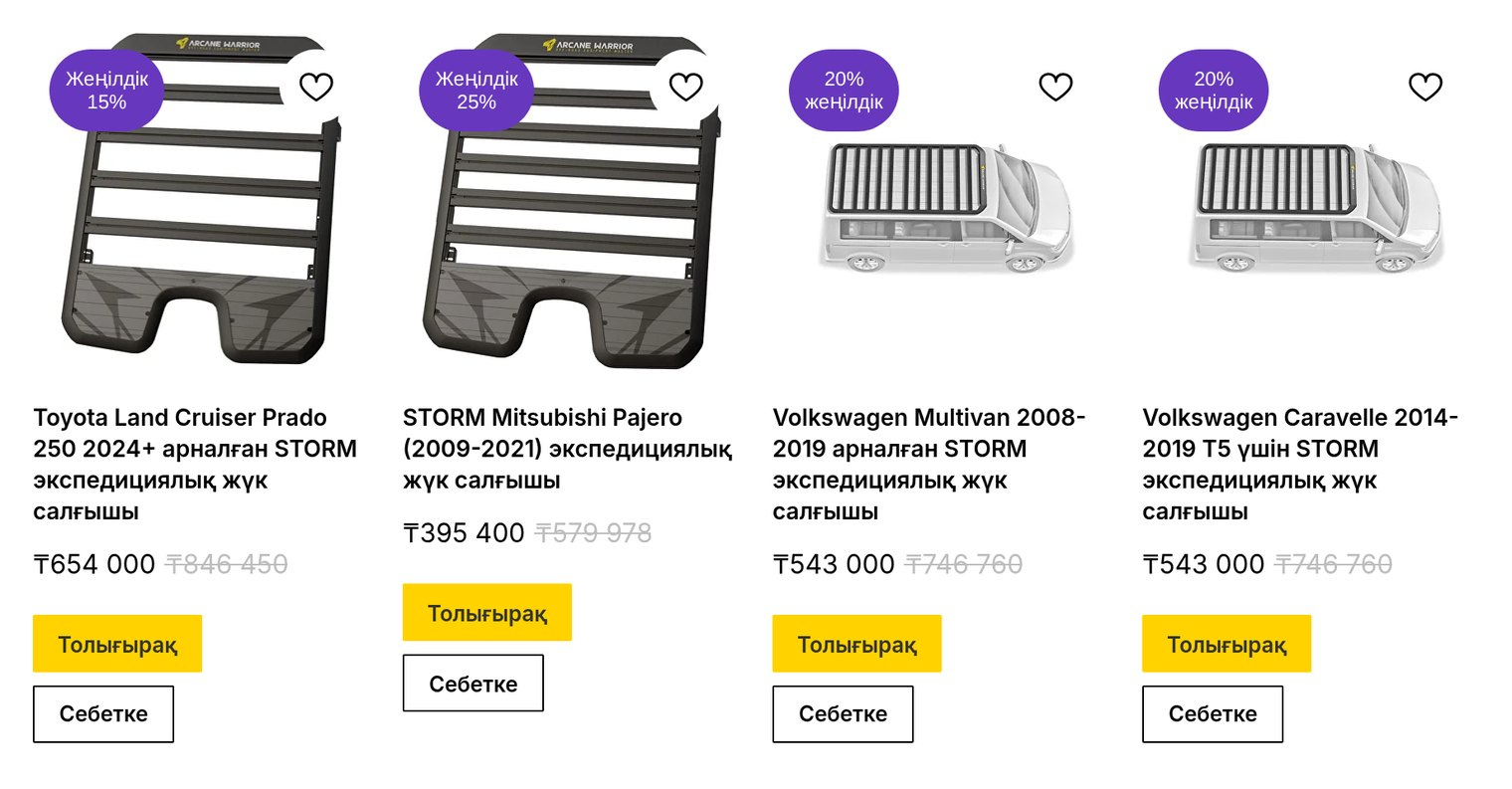
There may be a slight delay when first opening a section or sorting: at this moment, Multify translates the content. Everything works faster on subsequent loads.
Taught search to understand Kazakh
The catalog in Tilda is filled only in Russian, and the platform knows nothing about Kazakh translation. If you pass it a Kazakh request as is, the search will return an empty result.
Therefore, Multify first translates the request into the catalog language and only then passes it to Tilda. The customer types in "bekitkish" ("fastener" in Kazakh). Tilda searches in Russian, finds fastening bolts and brackets, and returns them, while Multify displays the results in Kazakh with prices in tenge. For the customer, this is a normal search in their native language.
Kazakhstan, Kazakh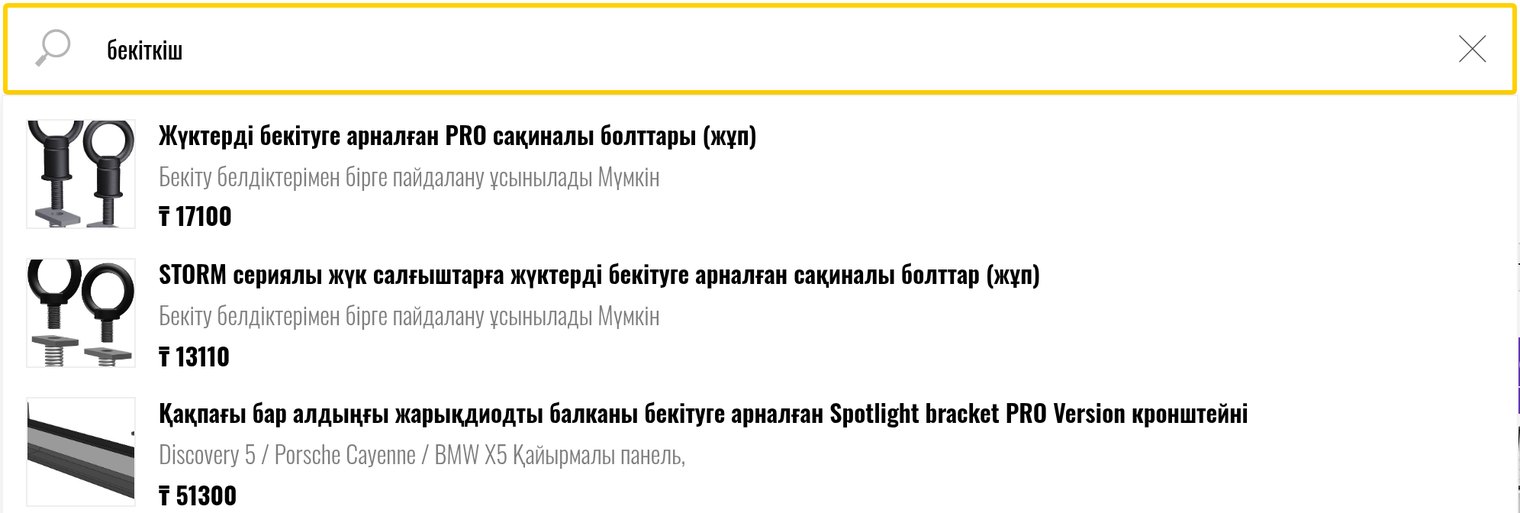
Translated the cart and checkout
The cart is translated just like the rest of the site: product names with selected configurations, fields with hints, promo code, consent to data processing. The total amount is displayed in tenge. Before sending the order, Multify verifies the prices in it against those the customer saw on the storefront.
Russia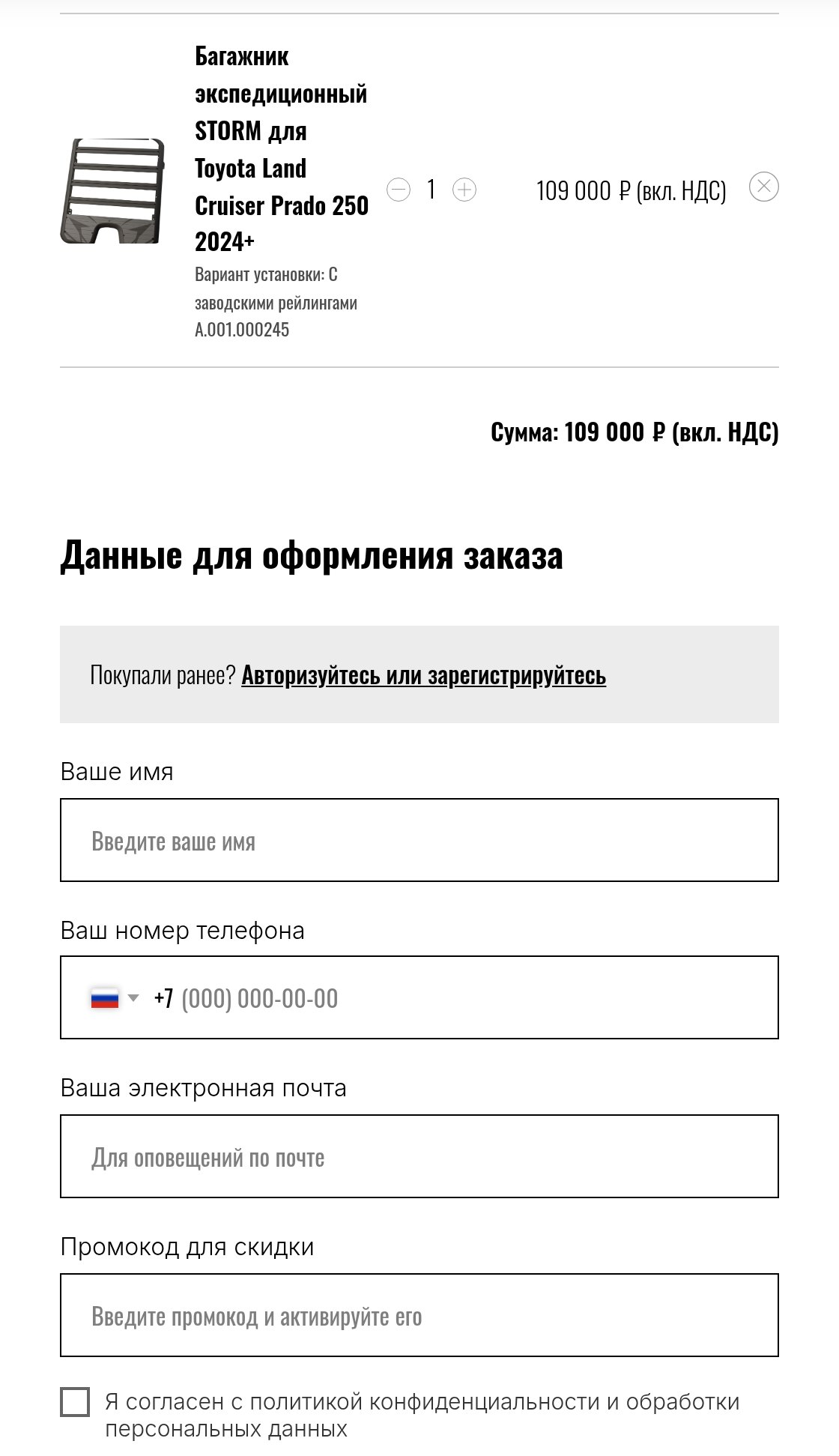
Kazakhstan, Kazakh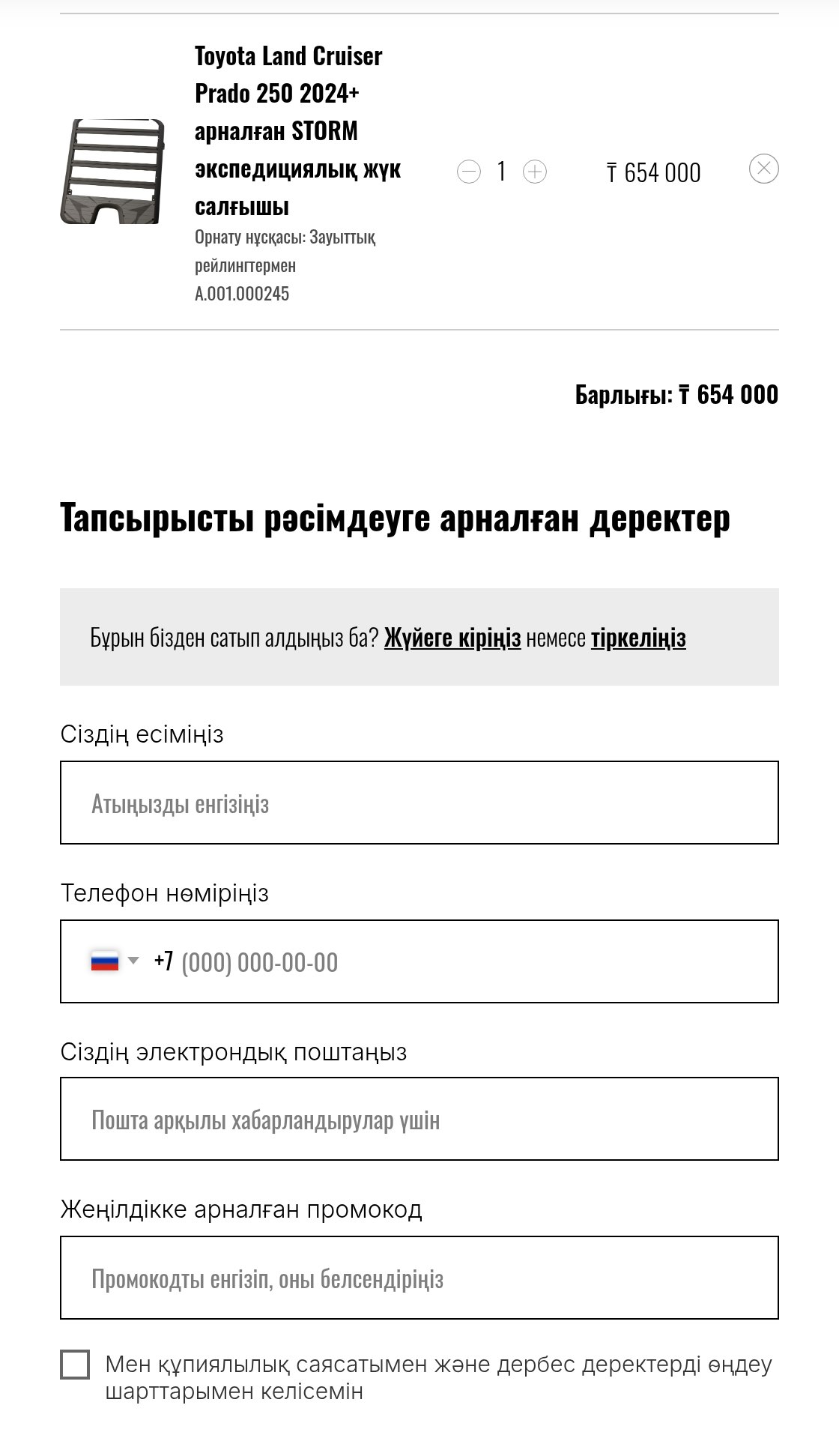
Different payment options can also be displayed. For example, in one version, international cards can be accepted, and in another, local payment methods. Everything depends on the site's payment systems, so we set them up manually with the client.
Added information about the site version to the application
How do you know which version the customer came from if there are three versions? Multify automatically adds service fields to each application from the form and to each order from the cart: domain, language, country, and page address. Nothing needs to be configured in Tilda forms.
New application: "We will calculate the cost and select a trunk"
- Car brand
- Toyota Land Cruiser Prado 250
- Email / TG / Phone number
- +7 7•• •••-••-••
Fields added by Multify
- multify-domain
- arcanewarrior.kz
- multify-prefix
- /kz
- multify-language
- kk
- multify-country
- kz
- multify-url
- https://arcanewarrior.kz/kz/
Result
- The website was connected in about three weeks. Almost all the time was spent not on technical work, but on discussions and comparing translations.
- One project in Tilda serves two domains and three versions of the website. New products, prices, and promotions are added once.
- Currently, more than 1000 people visit the website daily.
Who this approach is suitable for
This helps online stores with a large assortment that are entering the market of a neighboring country the most: the more products, the more expensive manual synchronization of two copies of the website becomes.
Multify's principle is always the same: you connect your website and set up the differences once, for example, contacts, promotions, or currency exchange rates. Then, versions for other countries and languages update automatically along with the main website.